
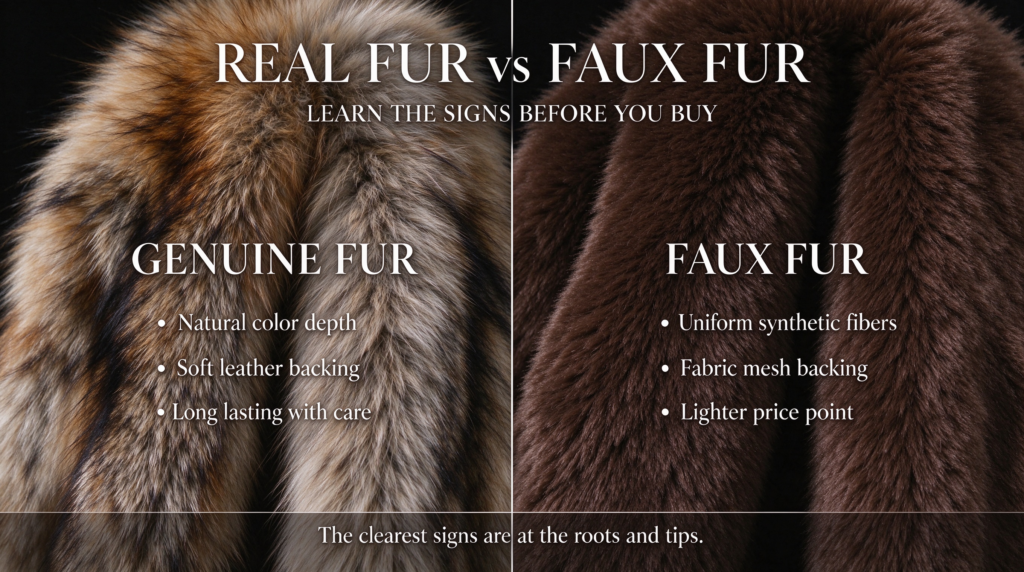
When shopping for luxury fur coats, it can be tricky to distinguish genuine animal fur from high-quality faux fur. Many modern faux fur pieces look incredibly similar at first glance. For buyers who value authenticity, long-lasting quality and fine craftsmanship, knowing the key differences is essential.
1. Touch Test
Real fur is ultra-soft, silky and lightweight. It glides smoothly between your fingers and carries a natural warmth, with uneven, organic texture changes. By contrast, faux fur often feels stiff or overly uniform. It may feel cold and plastic-like, especially at the base of the pile.
How to test:
- Gently run the fur across your hand or cheek.
- Real fur feels warm and supple.
- Faux fur often feels cold or coarse at the roots.
2. Base Check: Leather vs Fabric Backing
This is one of the most reliable ways to tell them apart — look underneath the hairs.
- Real fur: Hairs grow directly from animal skin. Pull back the fur and examine the roots. You will see natural leather hide. Individual hair strands taper to a fine point at the tip.
- Faux fur: Man-made fibers are stitched onto woven fabric or mesh backing. You may spot loose threads or woven textile patterns. Synthetic fur fibers usually have flat, cut ends.
3. Burn Test (For loose strands only, with caution)
This test should only be done on loose hair samples in a safe, well-ventilated space.
- Pluck a few strands from an inconspicuous spot.
- Hold them over a small flame for a few seconds.
✅ Real fur: Smells like burning human hair. It burns slowly and crumbles easily into ash when touched.
❌ Faux fur: Releases a strong chemical/plastic odor. It melts and forms hard, shiny plastic beads.
Warning: Always perform this test safely away from flammable materials. Never test on garments you do not own.
4. Blow Test — Watch How The Moves
A simple but effective check: blow lightly onto the fur and observe its behaviour.
- Real fur is light and breathable. It separates naturally, flows freely and bounces back elegantly.
- Faux fur is heavier and less flexible. Fibres tend to clump together, move stiffly and react sluggishly to airflow. This method works perfectly for checking collars, hood trims and fur accessories.
5. Visual Details: Shade, Shine & Natural Variation
Real fur has subtle, uneven colour gradients. No two strands are identical. Natural fur has soft, organic shine. Faux fur often has flat, uniform colour. It tends to have a harsh, artificial gloss under direct light. Synthetic fibre tips look blunt and machine-cut.
6. Price as a Reference
Genuine luxury fur requires skilled craftsmanship, time and premium raw materials. It is an investment piece that can last for decades with proper care. If a full-length fur coat is priced extremely low, it is almost certainly faux fur, even if advertised as real.
Why Choose Authentic Real Fur?
While faux fur has its own merits, genuine real fur offers unique benefits: ✅ Durability: With proper care, quality real fur can last for generations. ✅ Breathability & Insulation: Natural fur regulates body temperature far better than synthetic alternatives. ✅ Timeless luxury: Nothing replicates the natural softness, depth and elegant texture of real animal fur.
Final Tip: Trust Your Senses & Shop Wisely
Learning to tell real fur apart from faux fur helps you shop with confidence, especially when investing in luxury outerwear. Always buy from trusted suppliers who guarantee 100% genuine fur.